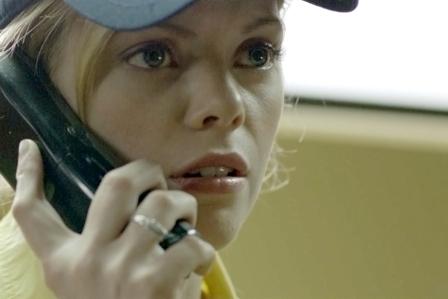
Craig Zobel’s Compliance has divided audiences since its dramatic screening at last year's Sundance Festival where a Q&A was met with jeers and boos as well as applause. The film takes place in a fast food restaurant on a busy Friday, where manager Sandra (Ann Dowd) is anticipating a difficult day after an open refrigerator door has left them with insufficient stocks of bacon and pickle. This, as it turns out, will be the least of her worries that day. Sandra receives a phonecall from a man posing as a police officer (Pat Healy) accusing one of the young staff, Becky (Dreama Walker), of theft. On the instructions of this voice on the end of the phone, Sandra conducts a strip search of her employee, beginning a disturbing chain of events that will eventually lead to a sexual assault.
A film based on true events, Compliance is an uncompromising and disturbing experience and as such, is the kind of film that risks alienating the audience. Sitting through the film is certainly an ordeal; a fact that has led to an interesting, if flawed comparison with Michael Haneke’s Funny Games. While Haneke challenged the audience to confront their own pleasure in watching suffering on screen, Zobel is rather less confrontational. He does not try to make the audience complicit in the suffering but makes them question how people who would ordinarily describe themselves as intelligent, capable or just plain good, could be pushed into such repellent actions. In turn it makes us wonder how we would act in such a situation.
This is something Zobel does extremely well. While the characters in the story descend further into exploitation, the film itself is not remotely exploitative. Though the camera observes Becky in some sensitive states, it never revels in her suffering. Crucially, the most serious incidents happen during cut-aways to the busy restaurant, as its clientele chow down, unaware of the story unfolding feet away.
To think that this is a true story, one that repeated itself many times in many different businesses is almost unbelievable. Zobel’s film may not give any hard and fast answers as to why these people followed orders with such blind obedience but its deliberate and terrible march towards its grim conclusion at least throws light on some seriously dark behaviour.