On the 22nd of August 1939, just before Germany invaded Poland, Hitler gave a speech to Wehrmacht commanders at his home in Obersalzberg in which he reportedly justified the planned extermination of Poles with the comment "Who, after all, speaks today of the annihilation of the Armenians?" If, in other words, the Ottoman Empire can lead a genocide which wiped out over a million Armenian people without suffering any consequences, then what was to stop Germany from doing the same in Poland? In the new age of fear of obfuscation in which we now live, such a statement still holds a terrifying power.
The fact that The Promise (directed by Terry George) has been met with hostility since its premiere at the Toronto Film Festival last September is a powerful statement in and of itself. The film, starring Oscar Isaac, Charlotte Le Bon and Christian Bale has been on the receiving end of some scathing reviews online and has been roundly condemned by the Turkish government. In the face of this blatant denial and hatred, it’s a shame that the film isn’t better than it is.
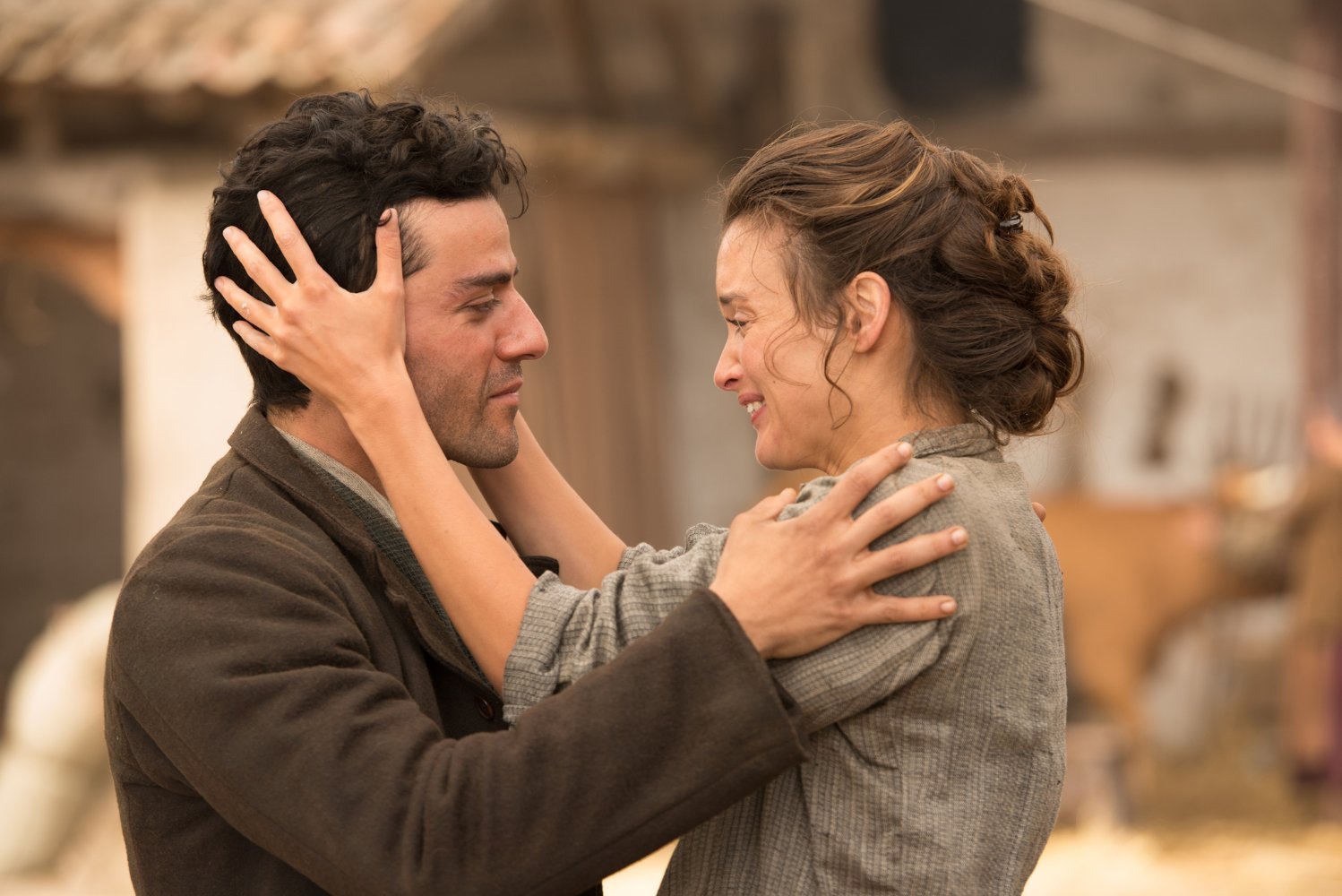
Oscar Isaac plays Mikael, an apothecary from a small town who is aching to travel to Constantinople to train as a doctor. His family cannot afford the college fees so in order to achieve his goal, he becomes engaged to the daughter of a well to do family and uses the dowry to fund his training. He sets off for the big city, promising to return to his fiancée in four years. In Constantinople, Mikael falls in love with both the bohemian atmosphere and the beautiful nanny of his Uncle’s children (Ana, played by Le Bon). Sadly, they cannot act upon their attraction because of their mutual attachments; Mikael has promised to return to his betrothed and Ana is attached to American journalist Chris Myers (Bale). When the Ottoman forces begin to round up Armenians, Mikael’s life is torn apart and the tragedy just keeps building.
The story of the Armenian genocide is powerfully upsetting and horrific in every way but I couldn’t help but feel that the central love triangle only serves to deaden the film’s impact. Although it is well played and relatively subtle, it’s a shame to think that an audience could only interact with this history via a love story. Credit should be given to everyone involved – this is a time period that deserves to have the brightest of lights shone upon it and the film is handsomely made and undeniably affecting. The central story though comes across as a little trite in the face of such adversity.