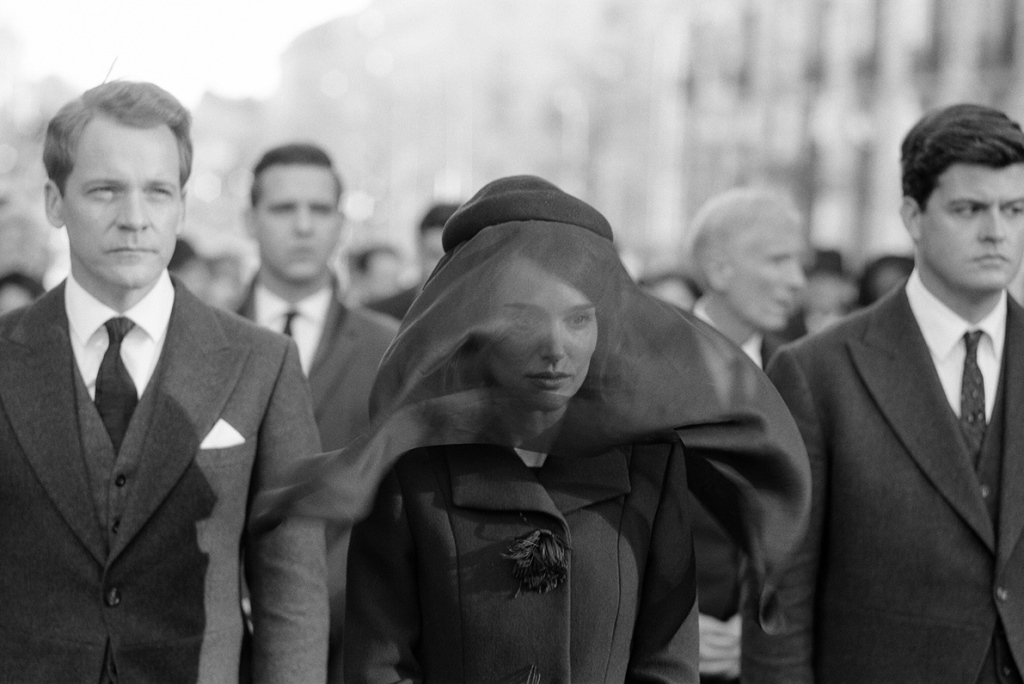
The word icon is bandied around a little too much in celebrity culture but its use to describe Jackie Kennedy Onassis is perfect. Young, glamourous and married to a President that danced, threw parties and philandered, she was the first "celebrity" First Lady. But there was also something remote and otherworldly about her; almost as if she has was an alabaster carving clad in Chanel and pearls. Jackie, the first English language film from celebrated Chilean director Pablo Larraín, examines how this smooth surface was irreparably cracked by the assassination of John F Kennedy in 1963.
The film is loosely based around an interview that takes place shortly after the assassination. Jackie is living in Hyannis Port, Massachusetts and is visited by a journalist from Life Magazine, played by Billy Crudup. During the course of this terse interview, we are brought back to witness what life was like for Jackie in the White House and how she coped in the direct aftermath of the assassination.
Occasionally it takes an outsider to see things as they really are. An American director would perhaps have been too precious with this material but Larraín has produced an elegiac, searing examination of grief, rather than a hagiography. His direction, helped along with the use of a dramatic orchestral score, has an operatic feel that is a world away from the unemotional sheen of Presidential propaganda. At its heart is a brilliant performance from Natalie Portman, who shows the evolution of Jackie from uncertain young woman to hardened authoritarian. Each stage is done with a pitch perfect clarity of performance – she inhabits this role completely. Crucially though, her performance never feels like caricature. The same can be said about the strong supporting cast that includes Peter Sarsgaard as Bobby Kennedy and Greta Gerwig as Nancy Tuckerman.
All in all, Jackie is a riveting watch. Innovatively directed and beautifully acted, this is a brutal and affecting look at an icon during her moment of crisis.