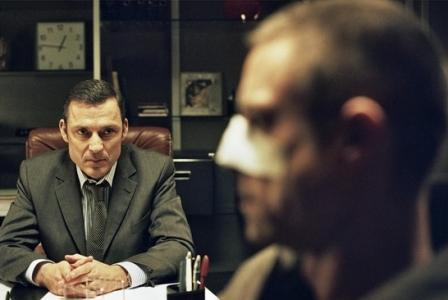
There is a rather unpleasant scene early in Lucas Belvaux’s Rapt in which the kidnapped industrialist Stanislas Graff parts company with his middle finger. Thankfully, this little moment of gore is not representative of the action to come.
Rapt is a film that is less about kidnapping and more about loyalty, the media and the machinations of power. Rather than staying solely with Stanislas throughout his ordeal, Belvaux focuses on how those back at home are coping as his name is dragged through the mud by the French gossip media. Secrets and lies are revealed causing not just his family to fall apart but also his career as his colleagues attempt to distance themselves from a potential PR disaster.
It is in portraying the ensuing conflicts of loyalty that Rapt really shines. Anne Consigny gives a polished performance as Francoise Graff- a wife dealing with a very public humiliation. There is wonderful tension between Consigny’s cool restraint and the blunt vulgarity of Francoise Fabian as Stanislas’ mother, who is more shocked at her son’s dwindling fortune than she is by his marital transgressions.
Meanwhile, we take occasional visits to the incarcerated Stanislas as he too falls apart – not only due to the incarceration itself but also the realisation as time goes on that his friends and colleagues may not be that keen to have him back. Yvan Attal’s performance is startlingly effective during this transformation. He becomes hunched, submissive and physically unrecognisable from the powerful man we met at the beginning.
Unfortunately, piled on top of some wonderful performances and interesting ideas is the rather less successful police procedural aspect. The majority of the run time is given over to a circular pattern of a succession of botched ransom attempts which, to be honest, cause the two hour runtime to drag a little.
Some judicious editing would have improved Rapt exponentially but if you look past the baggier elements of the plot you will be rewarded with a superior psychological thriller.